• Register
  • Membership
  • Login
Friends of Dyke Marsh
  • Home
  • About FODM
    • What We Do
    • Our History
    • Officers
    • Taking Action
  • Get Involved
    • Become a Member
    • Volunteer
    • Activities and Volunteer Events
  • Learn
    • Latest News
    • Newsletter
    • Maps and Directions
    • About the Marsh
      • Wildlife of the Marsh
      • Plants of the Marsh
    • Restoring the Marsh
    • Restoring Native Plants
    • Additional Resources
  • Contact Us
Become a Member
Donate
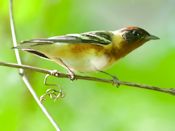
Bay-breasted warbler

Warbler Wonders

May 20, 2020

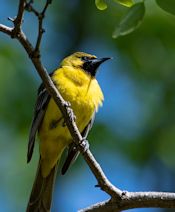
Many people have enjoyed warblers migrating through Dyke Marsh this spring, 2020. Many species have bright colors. Some migrate from South America to northern Canada.

Read more …
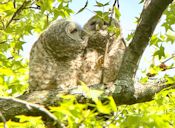
Barred owls

Barred Owls Raise Two Young in Dyke Marsh

April 21, 2020

Keen observers have watched the parents and two young barred owls (Strix varia) in Dyke Marsh this spring, 2020. Ed Eder captured the two owlets doing mutual preening on April 17 and Ed reported that they usually stick close together.

Barred owls are known for their haunting, baritone night call, “who cooks for you, who cooks for you-all.”  They get their name from their “bars” or striped plumage. Generally, they roost during the day and hunt at night. Adults are around 21 inches in length and a little over a pound in weight. They tend to be in older forests, but are highly adaptable to varied habitats, including mixed forests and disturbed areas. “Barred owls are the opportunists of the owl world,” wrote Leigh Clavez in The Hidden Lives of Owls.

Read more …
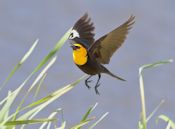
Yellow-headed blackbird

Yellow-headed Blackbird, a New Record

April 03, 2020

Dyke Marsh has had another first this spring, 2020 -- several sightings of a yellow-headed blackbird (Xanthocephalus xanthocephalus). In fact, it is a record for the George Washington Memorial Parkway according to Brent Steury, the Parkway’s Natural Resources Program Manager.

The beautiful blackbird in Dyke Marsh is a male with a stunning yellow head, black body, yellow breast and white markings on its wings. Females and immature males are brown-black with reduced yellow on the face, throat and brow. These birds typically nest in the West and Midwest in colonies, often alongside red-winged blackbirds in bullrushes or cattails. They forage on insects, grain and wet seeds.

Read more …

A Bald Eagle Attacked an Osprey

March 25, 2020

An osprey (Pandion haliaetus) was a victim of a bald eagle (Haliaeetus leucocephalus) attack on Sunday afternoon, March 22, 2020.  The bald eagle may have attacked the osprey trying to defend his or her territory or because of what is called kleptoparisitism when one species steals food from another.  The osprey came to the ground after the attack and was stuck in some bushes.  FODMers Rich Rieger and Sherman Suter extracted the bird and Rich wrapped it up in his coat.  Despite some bleeding, the osprey settled down and Rich placed the bird on a picnic table.  After a moment, the osprey took flight, seemed normal to the human eye and landed in the top of a tree.

Read more …
Dyke Marsh west

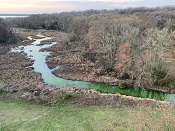
Dyke Marsh Turned Neon Green

March 22, 2020

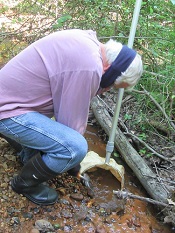
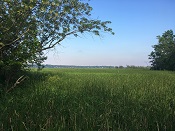
On March 20, 2020, around 7 a.m., several FODMers observed that the water in west Dyke Marsh and an unnamed stream flowing in the marsh was neon green.  This part of the marsh is around 15 to 20 acres and west of the George Washington Memorial Parkway.

We contacted local, state and National Park Service officials. Fairfax County sent wastewater and hazardous materials staffers, the Virginia Department of Environmental Quality sent pollution experts and the National Park Service sent a staffer, all to inspect the site.

Read more …
Rolf Gubler

Restoring Peregrine Falcons to Virginia’s Mountains

March 03, 2020

On March 1, 2020, Shenandoah National Park biologist Rolf Gubler described the peregrine falcon (Falco peregrinus) restoration project to a packed room of 80 enthusiasts.  This project in the park is a partnership of the National Park Service (NPS), William and Mary College’s Center for Conservation Biology (CCB), the Virginia Department of Game and Inland Fisheries (DGIF) and the Virginia Department of Transportation (VDOT).

Read more …
Ross's goose

Ross's Goose, a New Record

January 12, 2020

In early January 2020, FODMer Ed Eder photographed a rare visitor flying over Dyke Marsh, Ross’s goose (Anser rossi), which National Park Service biologist Brent Steury said was a new record sighting for the George Washington Memorial Parkway.

This goose is white with black wingtips and considered the smallest of the "light" or snow geese. Ross's goose has a short neck, rounded head and a stubby bill with no "grin patch" seen in its larger cousins due to their curved tomium, the cutting edge of the bill, Ed explained. More mature birds, particularly males, have warty gray tubercles at the base of their bills, said Ed.

Read more …
Eagle nest

Dyke Marsh in the News

December 04, 2019

On December 2, 2019, the Fort Hunt Herald newspaper published an interview with FODM President Glenda Booth, in which she discusses the marsh restoration project, emerald ash borer infestation, the native plants project, bald eagles and more.  Visit here to read the entire article.

Read more …
Dr. Valdes

Wildlife in a Changing Climate

November 18, 2019

On November 13, 2019, at FODM’s quarterly meeting, Dr. Sally Valdes outlined several ways that climate change is adversely affecting wildlife.  Introducing the topic, she said that carbon dioxide and other greenhouse gas emissions have risen to levels unprecedented in the last 800,000 years.  Carbon dioxide concentrations have been tracked continuously at the Mauna Loa Observatory in Hawaii since 1958 and the trend has been steadily upward, from about 315 parts per million (ppm) to 414 ppm in the spring of 2019. 

Read more …
volunteer

Enhancing the Native Plant Project

October 19, 2019

On October 11, 2019, FODM volunteers and National Park Service staff put in 400 more native plants in the native plant restoration area in Dyke Marsh, a .65-acre plot on the west side of the Haul Road trail.  The group planted riverbank wild rye (Elymus riparius), New York ironweed (Vernonia noveboracensis), wild rice (Zizania aquatica) and deer tongue (Dichanthelium clandestinum (syn. Panicum clandestinum)).

Read more …
seminole bat

FODMer Saves Bats

September 20, 2019

FODM Board of Directors’ member Deborah Klein Hammer saves bats and is featured in a September 16, 2019, article in “DCist” here.

Deborah studies Brazilian freetail (Tadarida brasiliensis) and Seminole bats (Lasiurus seminolus) in Dyke Marsh.  Around 2013, a Brazilian free-tailed bat came into care of the Save Lucy Campaign (www.savelucythebat.org/), an organization devoted to rehabilitating injured and orphaned bats and educating the public about the importance of bats. 

Read more …
Dyke Marsh

Dyke Marsh Turns a Brilliant Yellow

September 21, 2019

In the late summer and early fall, parts of Dyke Marsh turn a brilliant yellow. The yellow blossoms are typically plants in the family Asteraceae.

Many of the plants are Bidens laevis, common name, beggar-ticks, says botanist Dr. Elizabeth Wells, and she explains that they are restricted to low, wet places such as marshes. The name Bidens refers to the two teeth on each achene (Bidens = two (bi) teeth).

Read more …

Page 10 of 22

  • 5
  • 6
  • 7
  • 8
  • 9
  • 10
  • 11
  • 12
  • 13
  • 14

Explore

  • Home
  • What We Do
  • About the Marsh
  • Our History
  • Volunteer

logo

Friends of Dyke Marsh

P.O. Box 7183
Alexandria, Virginia 22307-7183
info@fodm.org

Resources

  • Newsletter
  • Latest News
  • Become a Member
  • Maps and Directions
  • Additional Resources
  • Contact Us
© 2026 Friends of Dyke Marsh.
Friends of Dyke Marsh
  • Home
  • About FODM
    • What We Do
    • Our History
    • Officers
    • Taking Action
  • Get Involved
    • Become a Member
    • Volunteer
    • Activities and Volunteer Events
  • Learn
    • Latest News
    • Newsletter
    • Maps and Directions
    • About the Marsh
      • Wildlife of the Marsh
      • Plants of the Marsh
    • Restoring the Marsh
    • Restoring Native Plants
    • Additional Resources
  • Contact Us
  • Register
  • Membership
  • Login