Much to See, Hear and Feel on Ecology Walk
Nature enthusiasts engaged all of their senses on the June 29, 2024, ecology walk led by Charles Smith along the Haul Road trail.
Nature enthusiasts engaged all of their senses on the June 29, 2024, ecology walk led by Charles Smith along the Haul Road trail.
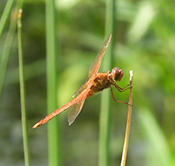
The year 2025 marked the tenth year that a dedicated group of FODM volunteers collected data on butterflies and dragonflies in Dyke Marsh and the Belle Haven Marina. In 2025, they documented 25 butterfly species and 17 dragonfly species.
FODMer Bill Young, a knowledgeable birder and videographer, has shared three of his videos about birds with us – videos about thrushes, woodpeckers and herons.
At least two species of thrushes breed in Dyke Marsh: the Eastern bluebird (Sialia sialis) and American robin (Turdus migratorius). Spring migrant thrushes include the Swainson's thrush (Catharus ustulatus), the hermit thrush (Catharus guttatus) and the wood thrush (Hylocichla mustelina).
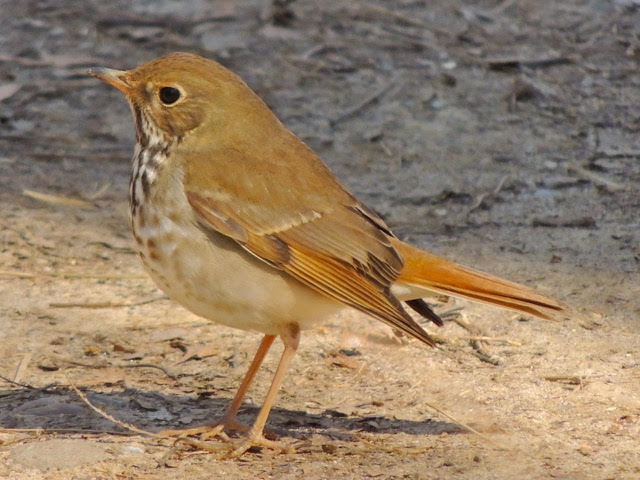 |
| Hermit thrush (Catharus guttatus). Photo by Bill Young |
Woodpeckers documented in Dyke Marsh include the pileated (Dryocopus pileatus), red-bellied (Melanerpes carolinus), hairy (Leuconotopicus villosus) and downy (Dryobates pubescens).
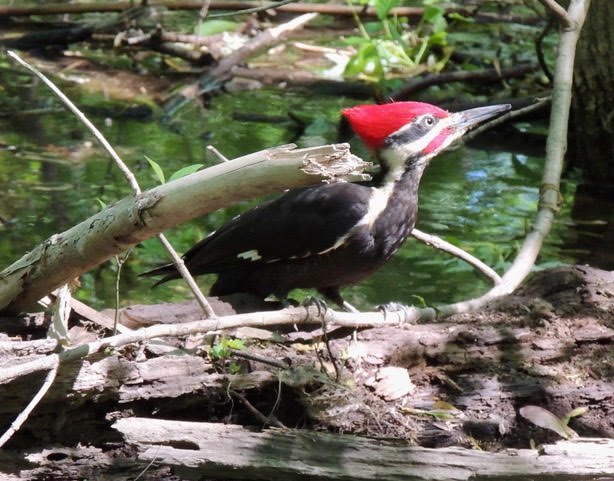 |
| Pileated woodpecker (Dryocopus pileatus). Photo by Bill Young |
Herons observed in Dyke Marsh include the great blue (Ardea herodias), the great egret (Ardea alba) and the least bittern (Botaurus exilis).
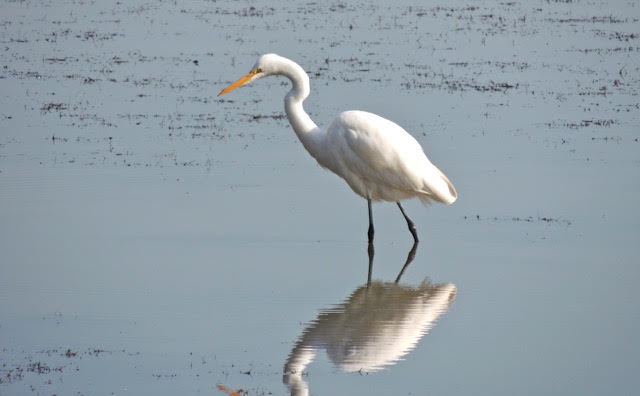 |
| Great egret (Ardea alba). Photo by Bill Young |
Here are links for the videos on YouTube:
Eastern Thrushes: https://www.youtube.com/watch?v=5k8bAn9T164
Eastern Woodpeckers: https://www.youtube.com/watch?v=sBexechgta0
On August 26, 2026, the Fairfax County Board of Supervisors honored the Friends of Dyke Marsh’s 50th anniversary, adopting a motion by Mount Vernon Supervisor Dan Storck and Board Chairman Jeff McKay. The Board directed the Office of Public Affairs to prepare a proclamation recognizing the 50th anniversary of FODM.
Supervisor Storck shared this article in his newsletter:
Tucked along the Potomac River, Dyke Marsh is a remarkable freshwater tidal wetland home to hundreds of species of plants and wildlife, and offers residents a place to experience nature right in our backyard. For 50 years, the Friends of Dyke Marsh (FODM) have worked to make sure this special place is protected for generations to come.
Founded in 1976, by a group of local residents concerned about the future of the marsh, FODM has grown into a dedicated community of volunteers who have spent five decades preserving, restoring and advocating. Their work reaches far beyond the marsh itself, from scientific studies, bird surveys and water quality monitoring to nature walks, invasive plant removal, trash cleanups and educational programs. The Friends have also been an important voice in the effort to restore and stabilize the marsh in partnership with the National Park Service.
Much of that work happens quietly, through people who show up year after year to care for a place they love. Glenda Booth, FODM’s President, is a tireless community leader who pours so much of her time and energy into the FODM. In addition to helping lead the organization’s advocacy and stewardship efforts, Glenda works diligently on The Marsh Wren, FODM’s newsletter, keeping members and the broader community informed about the latest happenings in Dyke Marsh and the ongoing work to protect it.
For 50 years, the Friends of Dyke Marsh have reminded us that protecting our parks, trails, waterways and natural spaces takes people willing to speak up, volunteer, educate and get their hands dirty. We are grateful to the countless volunteers who have given their time and talent to Dyke Marsh over the past five decades, and we congratulate FODM on this remarkable milestone.
 |
On September 12, 2026, five Virginia elected officials recognized the 50th anniversary of the Friends of Dyke Marsh at Fort Hunt Park before a crowd of over 500 people attending FODM’s Raptor Rapture event.
FODMer William Young has produced a captivating video about hummingbirds and their amazing features. “They weigh about as much as a penny,” he says. There are around 360 species in the world. You can view it on YouTube at https://www.youtube.com/watch?v=BW7C15B1FK0.
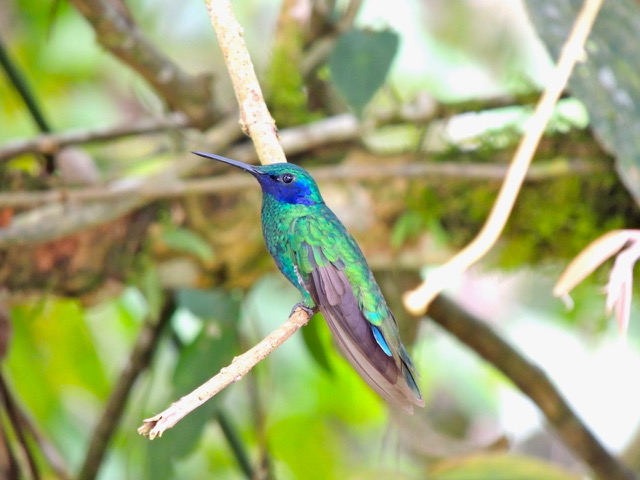 |
| Sparkling violetear (Colibri coruscans). Photo by William Young |

On July 13, 2026, Virginia’s Eighth District Congressman Don Beyer commended the Friends of Dyke Marsh for 50 years of volunteer work to preserve and restore Dyke Marsh. Here we share his statement from the Congressional Record.
On September 12, 2026, over 500 enthusiasts of all ages learned about raptors at Raptor Rapture, an event sponsored by the Friends of Dyke Marsh, the National Park Service and Secret Gardens, Birds and Bees at Fort Hunt Park.
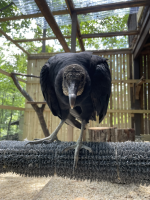
Contrary to the image in many Americans’ minds, vultures are beautiful, social, curious birds, Heather Shank-Givens told a 70-person, overflow crowd on March 8, 2026, at the Huntley Meadows Park Visitor Center.
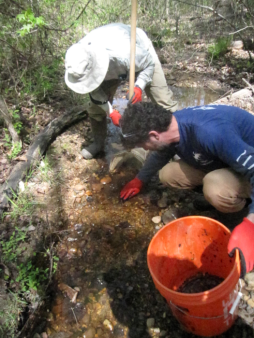
On April 8, 2026, FODM volunteers again conducted biological water quality sampling in an unnamed creek, nicknamed “Quander Creek,” that flows into Dyke Marsh from the west, the organization’s eleventh year of this project.
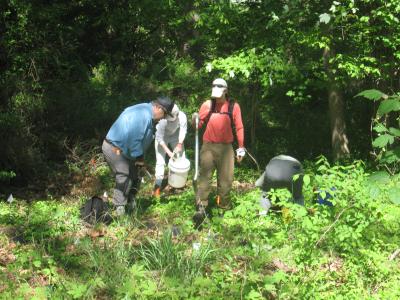
On April 18, 2026, 25 volunteers planted around 200 native plants in Dyke Marsh, a joint project of the Friends of Dyke Marsh and the Sierra Club Great Falls Group. The two organizations partnered and successfully received a grant from the national Sierra Club to fund the project.
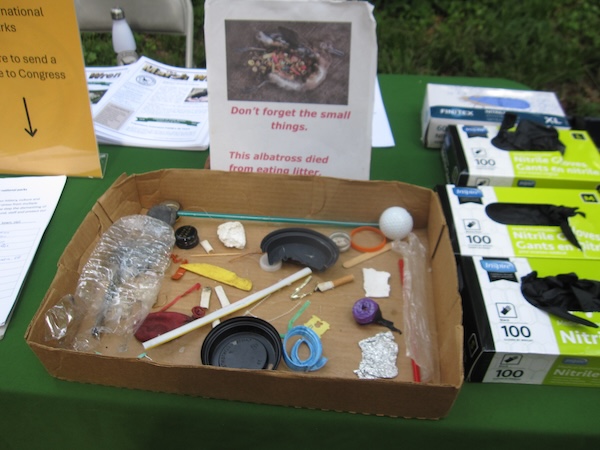
The Friends of Dyke Marsh partnered with the National Park Service and participated in Clean the Bay Day, on May 2, 2026, a day when over 2,300 volunteers collected trash from the Chesapeake Bay and its tributaries.