FODMers and friends had an informative tutorial on some of Virginia’s freshwater fish species at the October 21, 2026,
member meeting from Mike Pinder’s online presentation titled“Freshwater Fishes, Exploring Virginia’s Hidden Treasures.” Pinder is an
aquatic biologist with the state’s Department of Wildlife Resources.
Here are some of his key points:
- Virginia’s rivers and streams are home to 225 freshwater fish species in 26 families. The Potomac River watershed has 64
native species and one non-native, the northern snakehead. - Freshwater fish are the second largest vertebrate group in Virginia behind birds. Sport or game fish like bass and bluegills may be better known, but they are “a small component of Virginia’s fish,” he said.
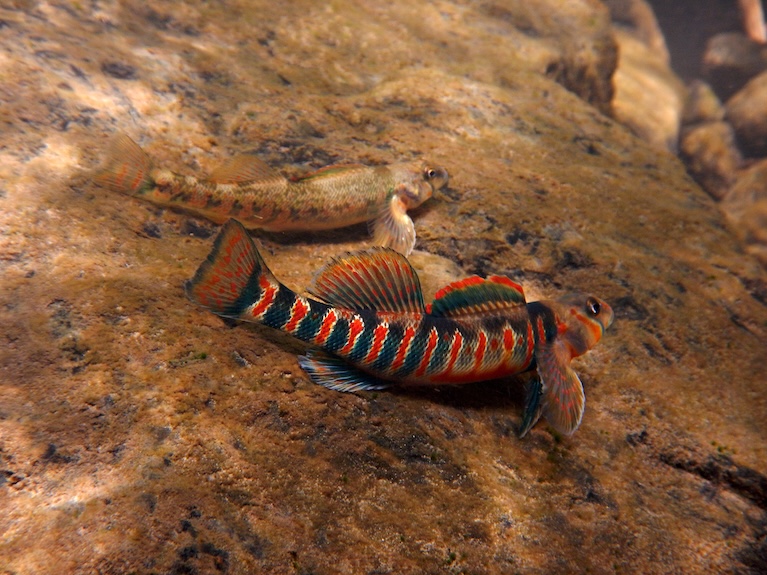
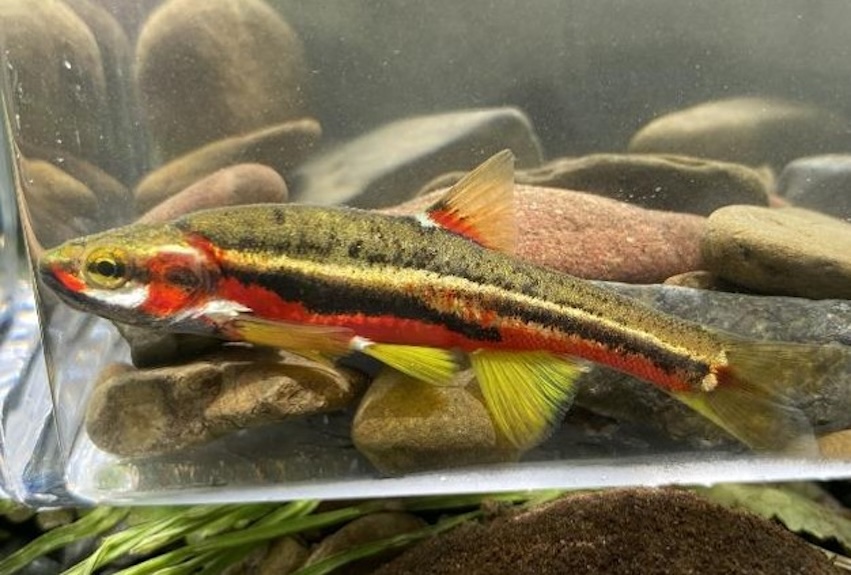
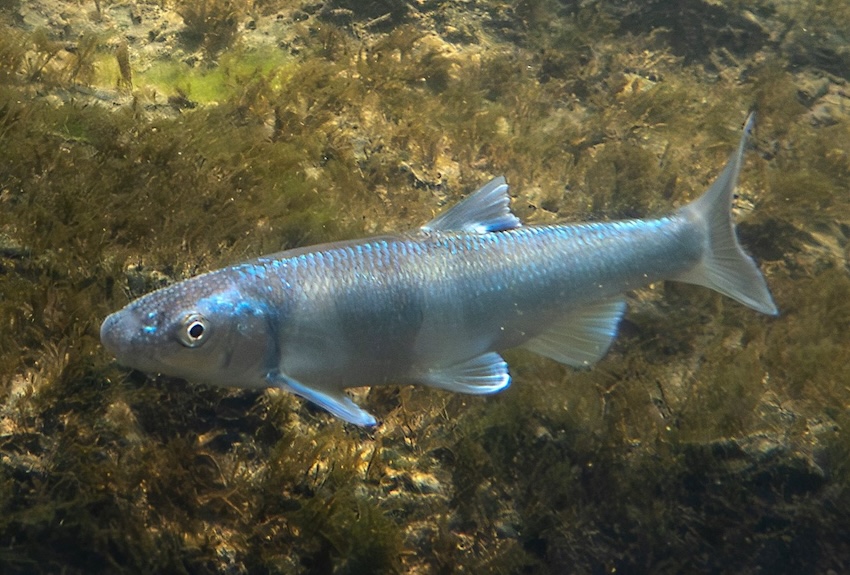
- Virginia has many colorful fish, like the red-belly dace with an orangey-red stripe on its belly and gold-colored fins; the candy darter, found in southwest Virginia’s New River drainage, “one of most beautiful freshwater fishes in North America” and a fish on the state and federal endangered species list and the bright blue, male spotfin chub that likes fast water. “It looks like it’s been plugged into an electrical outlet,” he quipped.
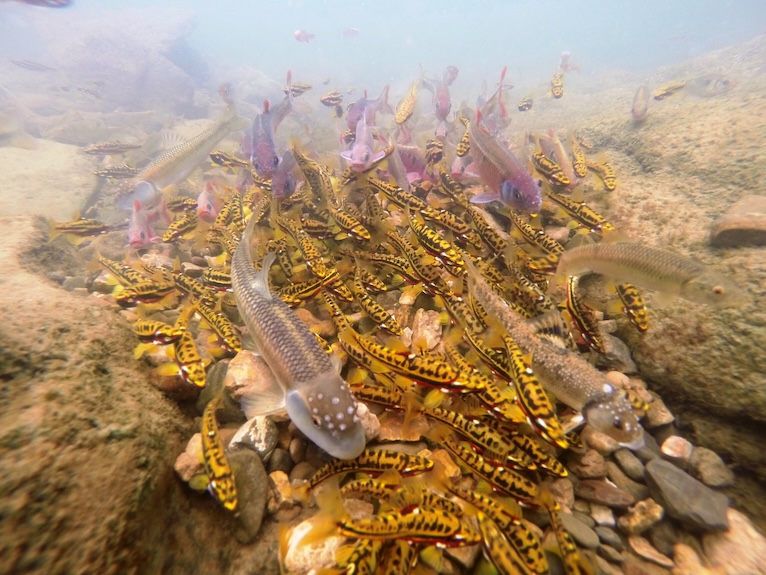
Pinder focused especially on mound builders, like chubs that during the breeding season, usually between April and July, carry rocks in their mouths and make rock piles for nests. The chub digs pits in the rock nests and then mates in the pits. “A chub can carry 10,000 stones to make a mound. One traveled an accumulated distance of 16 miles to collect enough rocks to build a nest. They use the current to carry rocks downstream, which is pretty smart,” he said.
The mounds attract other minnows, what ichthyologists call “nest associates” that only spawn on a chub’s mound so if we lose chubs, we will lose minnows, the foundation of food chain, Pinder stressed.
He emphasized the importance of biodiversity and clean water. “If a stream has a lot of fish, snails, crayfish, salamanders and mussels, it’s a healthy community. All these animals depend on each other. This is the water we drink. We cannot live without clean water. Just having water is not enough.
“To protect these animals is protecting ourselves. The more we know, the more we love it and want to protect it and its habitat,” he said.
Here is a list of Virginia’s fish in taxonomic order, provided by Mr. Pinder. The species highlighted in yellow have been found in and around Dyke Marsh.
Virginia_Fish_List_Taxonomic_order_Dyke_Marsh.pdf
 |
 |
|
Male (foreground) and female candy darters (Etheostoma osburni) Photo by Derek Wheaton |
Minnows (Cyprinidae family) on bluehead chub (Nocomis leptocephalus) nest Photo by Mike Pinder |
 |
 |
|
Mountain redbelly dace (Chrosomus oreas) Photo by Mike Pinder |
Spotfin chub (Erimonax monachus) Photo by Maddie Smith |