Eighty FODMers and friends learned how many “pieces” of nature are interconnected in a Zoom talk titled “Nature’s Puzzle” by Alfonso Abugattas on May 13, 2026.
“We are part of the puzzle too and what we do has consequences,” he stressed. Abugattas is the Natural Resources Manager for Arlington County Parks and founder of the Capital Naturalist blog.
He offered several examples:
- Yellow lady slippers (Cypripedium parviflorum) have a symbiotic relationship with mycorrhizal fungi. The root tissues of the fungi and plant grow together and they must to survive.
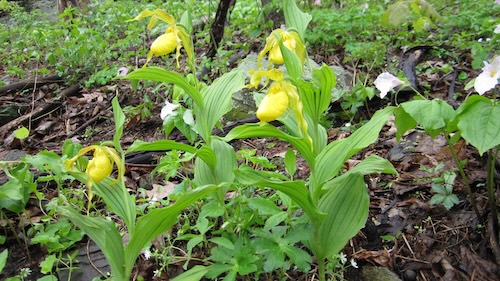 |
| Yellow lady slipper orchids require certain mycorrhizal fungi to be present or they cannot survive. |
| Photo by Alonso Abugattas |
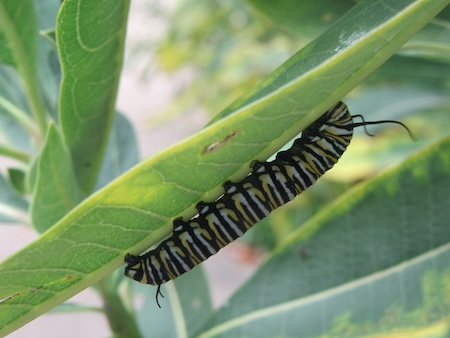
- Monarch butterflies (Danaus Plexippus) require milkweed plants as their host plants. This butterfly’s caterpillars feed on milkweed leaves as do the caterpillars of 12 other insects, like the milkweed tussock moth (Euchaetes egle). A host plant is a specific plant that an insect or its larvae eat, live on or lay eggs on, a plant with which the insect co-evolved.
 |
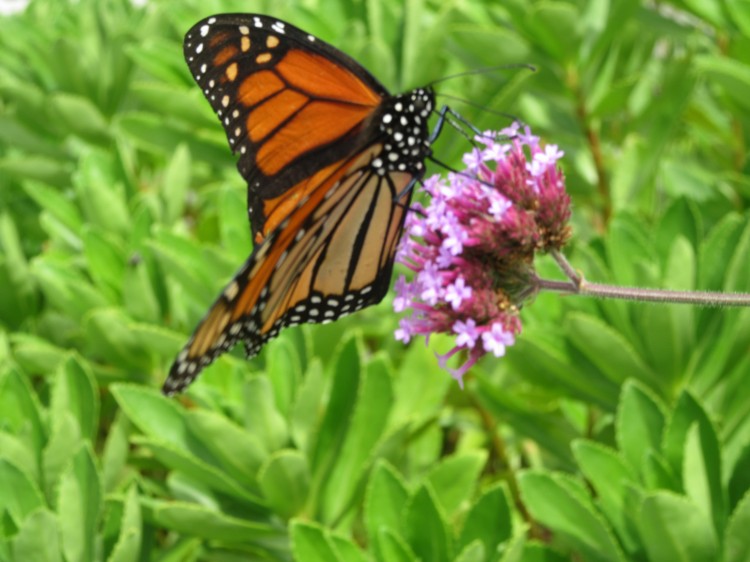 |
| A monarch butterfy caterpillar. | A monarch butterfly on a swamp milkweed plant. |
| Photo by Glenda Booth | Photo by Glenda Booth |
- Carolina chickadee (Parus carolinensis) nestlings must have protein and depend on caterpillars. Entomologists Dr. Doug Tallamy and Desiree Narango documented that a clutch of chickadee young eats about 350 to 570 caterpillars per day, depending on the number of chicks.
-
Galls are “edible homes,” Abugattas said, like the “witch hat” galls created by aphids on witch hazel (Hamamelis virginiana) leaves which host critters like mites.
He urged people to control invasive plants and plant native plants to restore biodiversity and support native wildlife. Oak trees, for example, support 600 species that rely solely on oaks, including over 40 mammals, 60 birds and 557 caterpillars. “Gingkos support zip,” he said. “Nothing.”
He quoted environmental advocate John Muir who said, “When we try to pick out anything by itself, we find it hitched to everything else in the universe.”
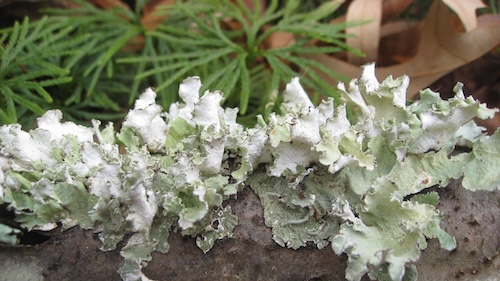 |
| A lichen is an organism formed by a symbiotic partnership between a fungus and a photosynthetic partner, typically algae or cyanobacteria. |
| Photo by Alonso Abugattas |
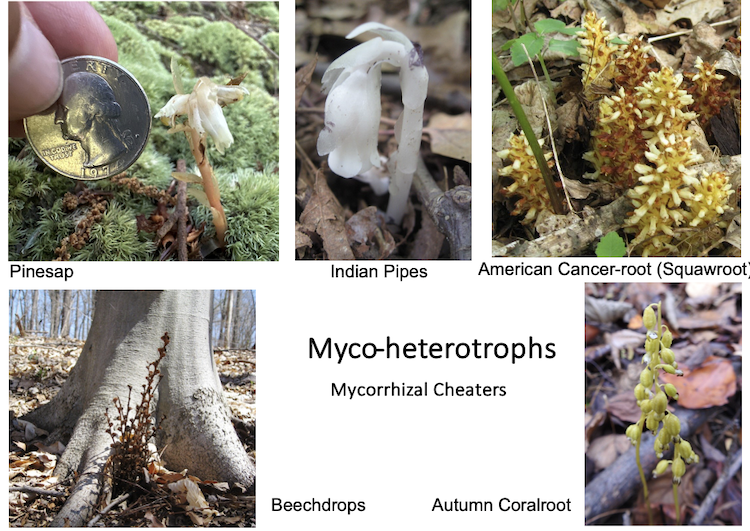 |
| Some plants do not produce chlorophyll, but survive by stealing food from the specific mycorrhizal fungi and the specific host plant it needs. |
| Photos by Alonso Abugattas |