On April 8, 2026, FODM volunteers again conducted biological water quality sampling in an unnamed creek, nicknamed “Quander Creek,” that flows into Dyke Marsh from the west, the organization’s eleventh year of this project.
The group took samples from the riffles, banks and woody debris within a 100-meter segment of the stream, under the leadership of Dan Schwartz, a soil scientist with the Northern Virginia Soil and Water Conservation District (NVSWCD).
To determine stream health, the goal was to identify 100 living invertebrates that are not scuds. The type of invertebrates in a stream is an indicator of stream quality, as some species are tolerant of degraded environments and others are very sensitive.
In around two hours, the group found 21 invertebrates: one dragonfly, 12 true flies, two worms, two sowbugs and three midges. They also found 33 scuds. Only once has this sampling met the 100-organism minimum, in 2021 when volunteers collected 206 organisms.
“Overall, low unofficial stream scores and a low number of total organisms collected at each sampling likely indicate that Quander Creek is in poor ecological health,” wrote NVSWCD leader Ashley Palmer in a 2023 report. “A healthy stream is abundant in both quantity and biodiversity of macroinvertebrates, which serve many important functions in aquatic food webs.” Over 75 percent of Fairfax County’s streams are in fair to very poor condition.
“Monitoring our streams is important because it shows the public just how much life is actually present in just the first inch below the sand and gravel on the stream bottom. It also enables us to see if the health of the stream changes, for good or bad, over time and report those changes to the state,” said Schwartz.
 |
 |
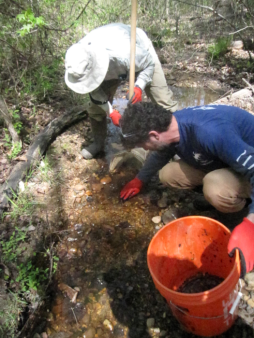
| Volunteers scooped up wet sediments from the creek. |
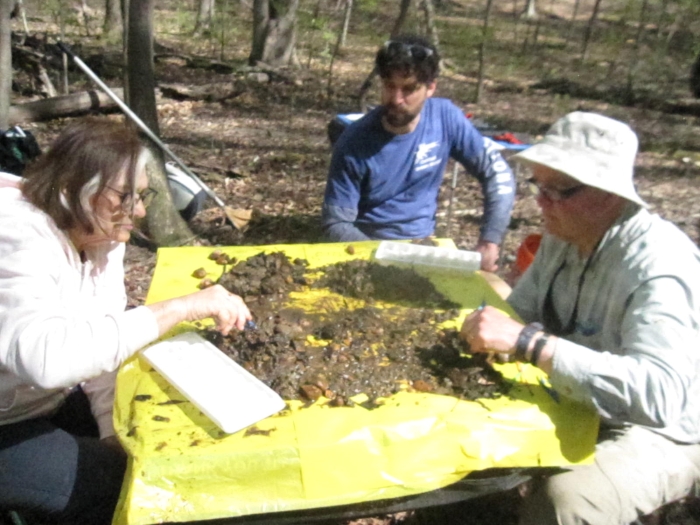 |
| Dianne Modell, Dan Schwartz and John Fagan |
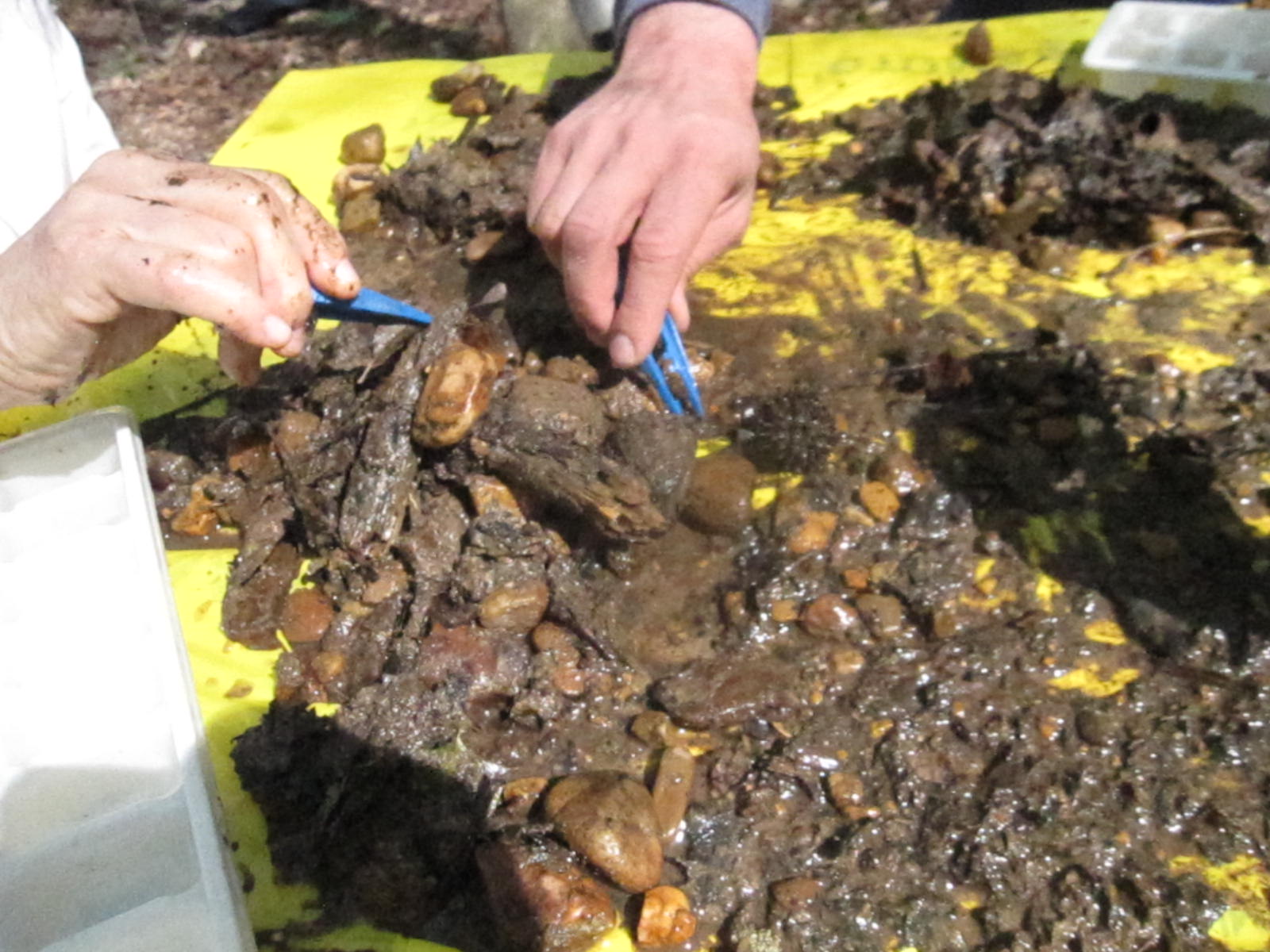 |
| probed the sediments for macroinvertebrates, indictors of stream quality. |
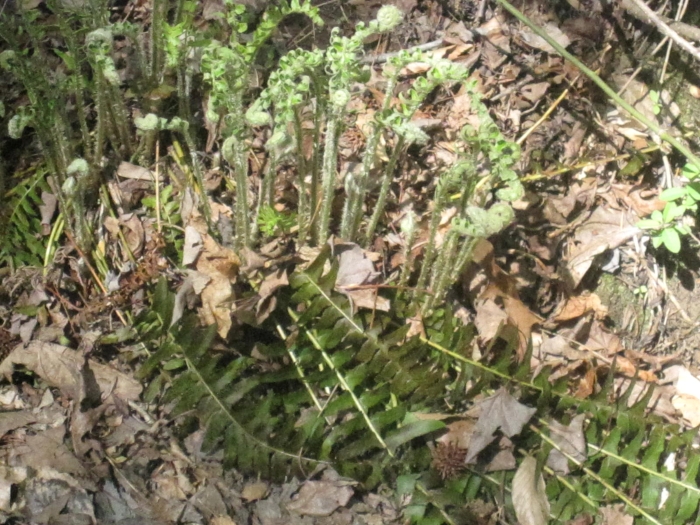 |
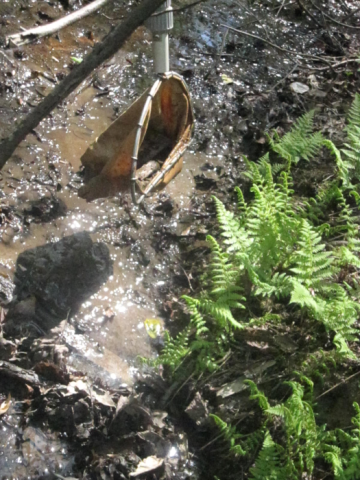
| The fiddleheads were a sign of spring along the creek. |
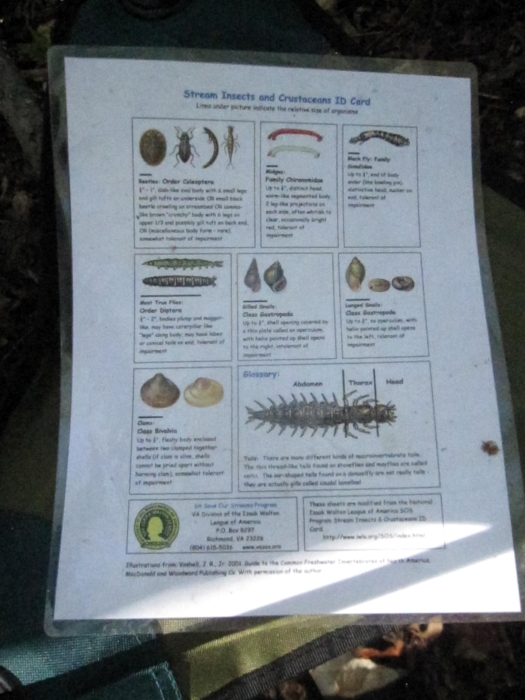 |
| Volunteers used guides like this to identify the critters they found. |