Contrary to the image in many Americans’ minds, vultures are beautiful, social, curious birds, Heather Shank-Givens told a 70-person, overflow crowd on March 8, 2026, at the Huntley Meadows Park Visitor Center.
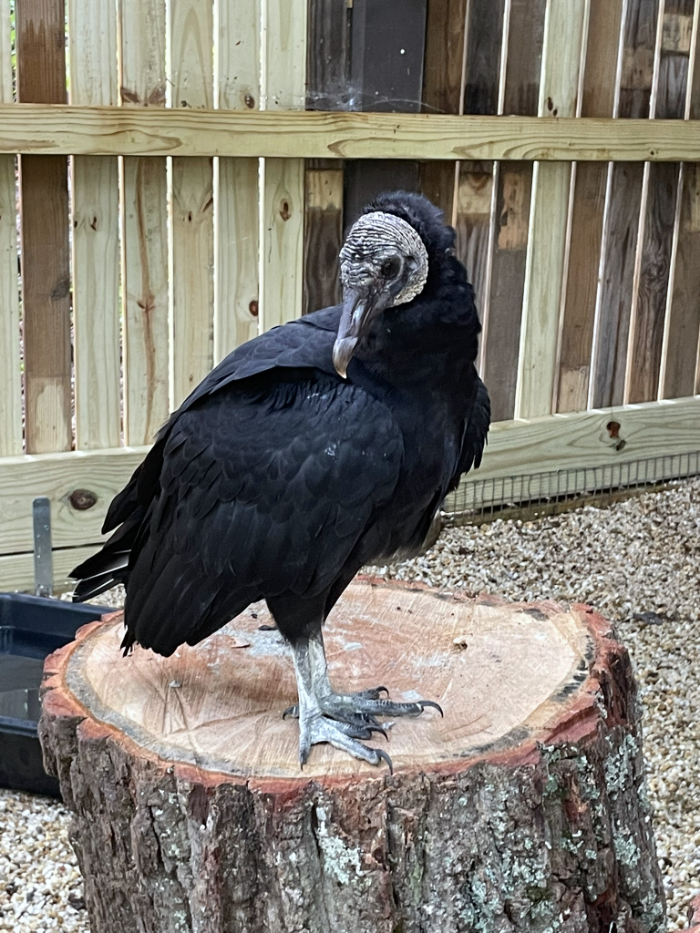
Shank-Givens described the characteristics, behavior and distribution of the two species common in Virginia: the black vulture (Coragyps atratus) and the turkey vulture (Cathartes aura).
Vultures thrive near human habitation, on roadkill and garbage and people-built structures. “We create the perfect habitat for vultures,” she elaborated.” They are very social and like to congregate.
Vultures provide critical ecological services because as scavengers they can rapidly consume and remove carcasses from environment. By eating dead animals, they can also remove diseases like rabies, anthrax and cholera.
Shank-Givens summarized, “I think they are all beautiful.”
The meeting was hosted by the Friends of Dyke Marsh, Friends of Huntley Meadows Park, Northern Virginia Bird Club and the Northern Virginia Bird Alliance.
To see the presentation images, click here: Amazing Vultures Presentation
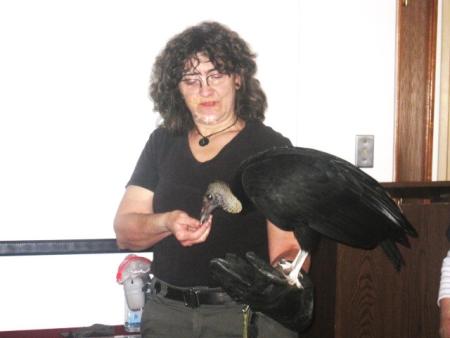 |
| Heather Shank-Givens is a volunteer wildlife rehabilitator with licenses to take care of Dusty, a black vulture. Photo by Glenda Booth |
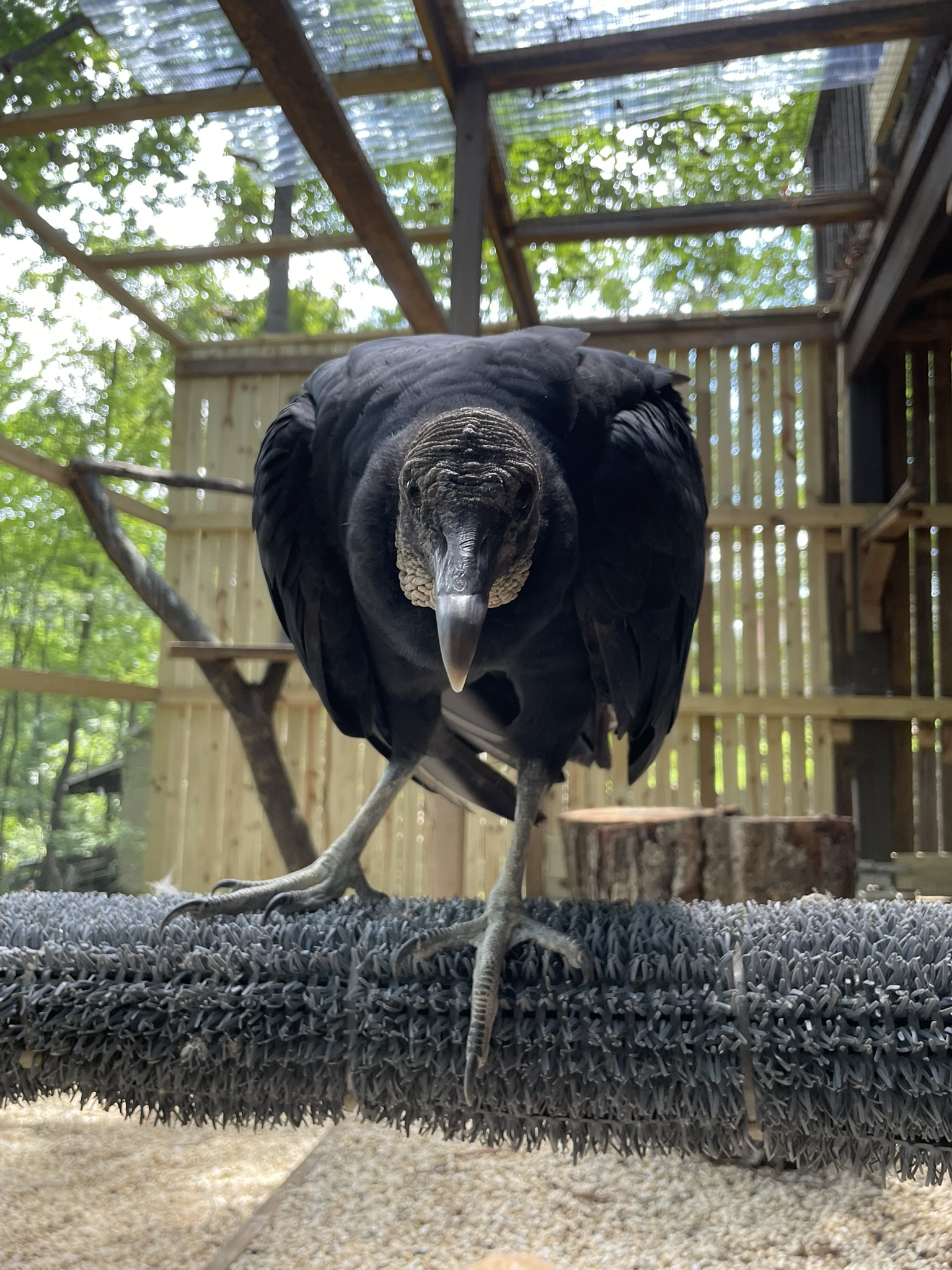 |
| Vultures, like this one, are consummate scavengers and have a critical ecological niche. Photo by Heather Shank-Givens |
 |
|
Dusty is a non-releasable, ambassador black vulture that intrigued her audience. |